Buy Ubiquinol Now
HAPPY HEALTHY AGING MONTH!
Celebrate with 25% off sitewide at NewQ. Use code HEALTHYAGING.
SHOP NOW →HAPPY HEALTHY AGING MONTH!
Celebrate with 25% off sitewide at NewQ. Use code HEALTHYAGING.
SHOP NOW →

Updated on August 3, 2021
Meal Plan Created By: Amanda Kostro Miller
The traditional Greek diet — sometimes lumped together with the Mediterranean Diet — is considered among the healthiest in the world thanks to being rich in antioxidants, healthy fats, fiber, vitamins, and minerals. Not only is it healthy, but it’s also flavorful. The traditional diet of Greece (the diet before 1960) consists of a high intake of fruits, vegetables, nuts, whole grains, olive oil and olives, more cheese but less milk, and more fish and less meat and has been linked to many health benefits, including healthy aging.1,2 We’ve partnered with a Registered Dietician to bring the Greek diet and its health benefits to you. Opa!
Download The Printable Meal Plan
We’ve all been told, “Eat your vegetables” and there’s a good reason why, too. Fruits and vegetables are rich in important vitamins, minerals, and antioxidants. Research shows that a diet rich in a variety of vegetables and fruits is linked to lower blood pressure, reduced risk of heart disease, stroke and some types of cancer, lower risk of vision issues, and reduced risk of digestive problems.4
Another Greek diet health benefit is that far less red meat is consumed than with a typical Western diet. High intake of red meat has been linked to an increased risk for cardiovascular disease, colorectal cancer, and type 2 diabetes.3 A Greek diet includes more fish, which contains heart-healthy omega-3 fatty acids, which have been found to help decrease triglycerides, lower blood pressure, reduce blood clotting, and lower your risk of stroke and cardiovascular disease.5
While you may think of fats as being bad for you, not all fats are created equally. Healthy fats — monounsaturated fat — found in nuts, olives, and olive oil have been found to lower total cholesterol and low-density lipoprotein (LDL or bad) cholesterol levels.6
The Greek diet focuses on healthy, whole grains rather than refined grains such as pasta and white bread made from refined wheat. A diet heavy in refined grains is linked to many health issues such as an increased risk of obesity, high blood pressure, stroke, type 2 diabetes, and heart attack,7 whereas diets rich in whole grains reduce those risks. Whole grains contain important nutrients such as protein, fiber, B vitamins, antioxidants, and minerals such as iron, zinc, copper, and magnesium.8
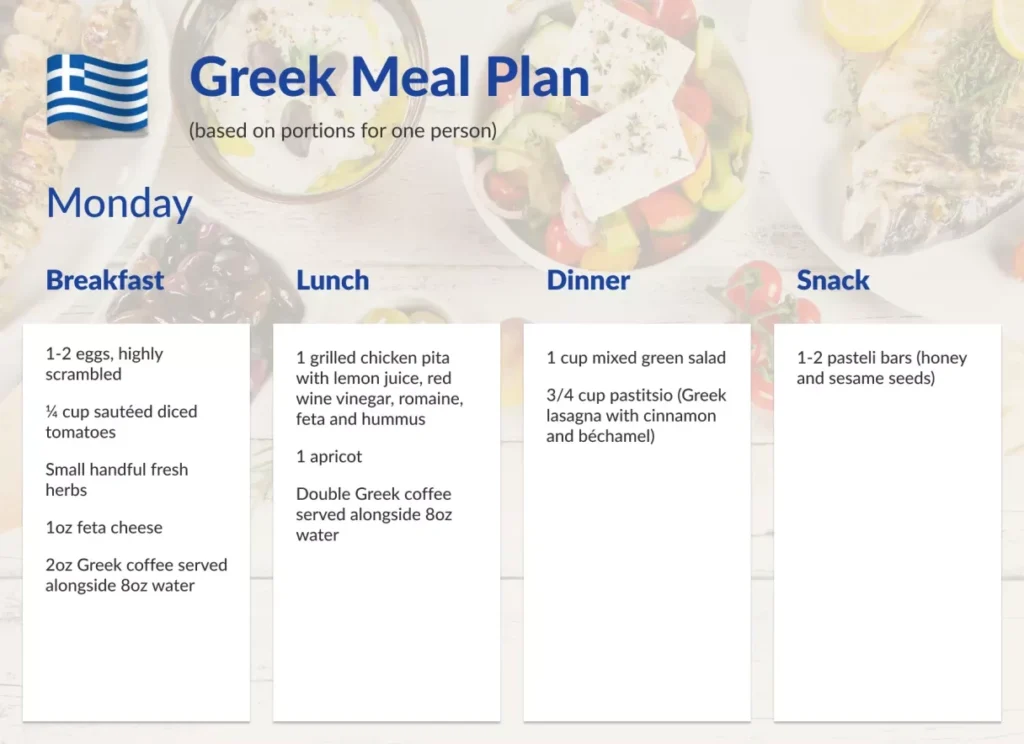
Enjoy the benefits of a heart-healthy Greek diet by downloading our free, 7-day meal plan. You’ll get scrumptious recipe ideas for traditional Greek fare like sfougato, a crustless quiche, spanakopita, a flaky spinach pie, and satisfying snacks like pasteli bars. Full of heart-healthy nutrition, we’re sure you’re going to be gaga for Greek!
*A health-promoting diet focuses on a variety of nutrient-dense foods, including vegetables, fruits, whole grains, lean proteins, and healthy fats from nuts and plant oils. Limit intake of both saturated fat and added sugars to less than 10% of your daily calories, and sodium to less than 2,300 mg per day. 2,000 calories a day is used for general nutrition advice, but your calorie and other nutrient needs may vary. For dietary guidance specific to you, consult a healthcare provider.

Sign up for our Kaneka Ubiquinol® Newsletter & get tips and resources on cellular wellness, healthy aging, heart health, supplement facts more – delivered right to your inbox.
"*" indicates required fields

If you’re trying to eat healthier, you’ve probably encountered conflicting nutrition advice that leaves you feeling more confused than inspired. From avoiding carbs to plant-based...
You’ve likely heard the term “antioxidant” in conversations about free radicals and general health. But many people aren’t clear on how these concepts are connected...
You’ve probably heard of ubiquinol, but what role does it play in your health — or your meals? Ubiquinol, the active antioxidant form of CoQ10,...