
Buy Ubiquinol Now

The more you know about your heart health, the better you can support your overall heart health and make dietary and lifestyle changes to reduce your risk of heart disease. Measurements like blood pressure, cholesterol, blood sugar, body mass index, and heart rate can tell you a lot about your heart and overall health.
These key markers for heart health should be checked at least every year by your physician or healthcare provider. When checked and charted regularly, you can track not only your current heart health numbers, but also how they’ve changed over time as you age, and if they fall within normal ranges. This is important because tracking your heart health means paying attention, looking for changes, and discussing recommendations for obtaining better numbers with your healthcare provider.
Regularly checking, charting, and observing these five heart health numbers should be a regular part of your heart-healthy lifestyle. If your numbers fall into unhealthy ranges, speak to your doctor immediately about changes you can make to decrease your risk for cardiovascular problems and improve your overall health.
Read More: Guide To Health Screenings At Every Age
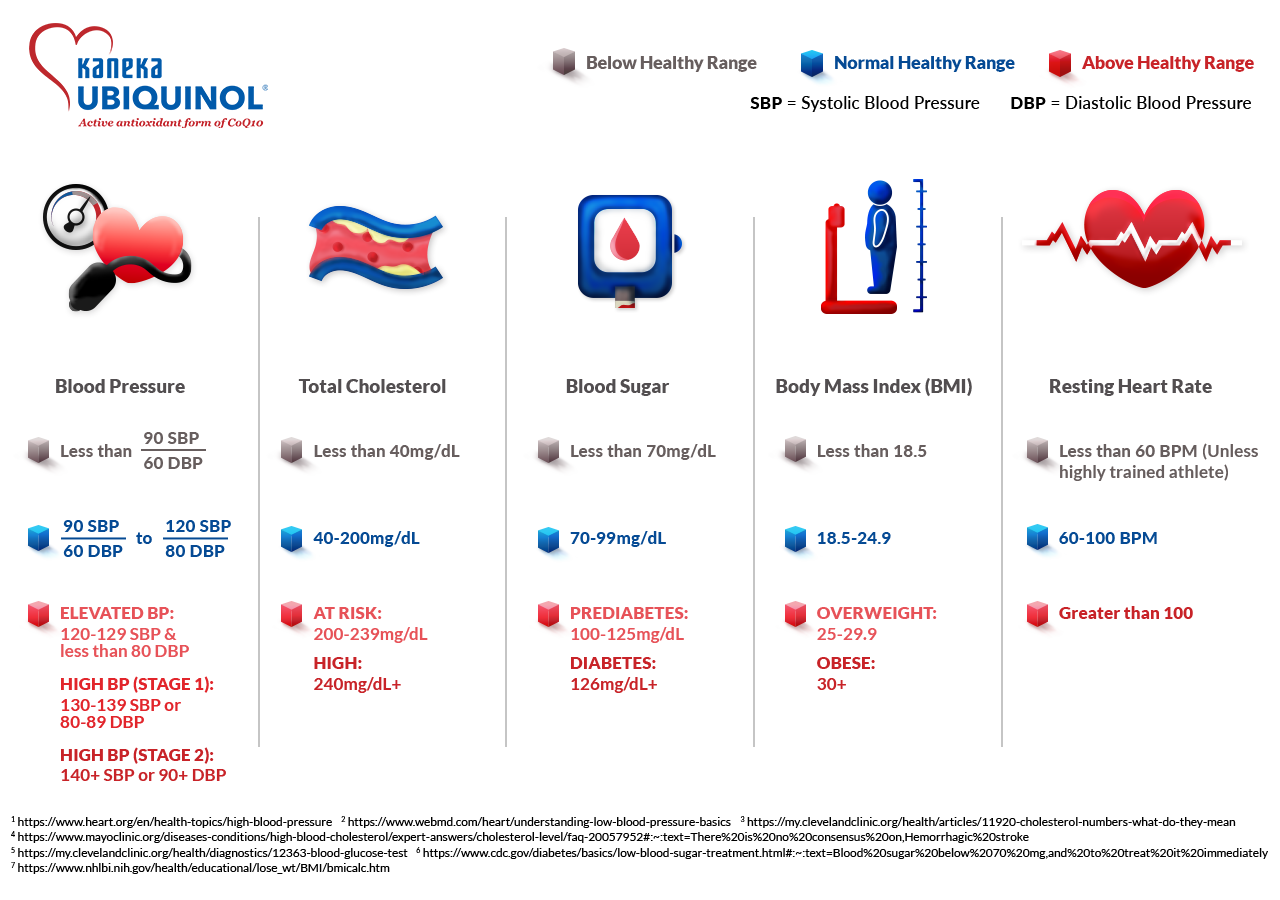
Blood Pressure
Regularly measuring your blood pressure can help to detect early signs of high blood pressure, or hypertension. Blood pressure monitoring measures your systolic pressure (the first number, when the heart pushes blood out of the chambers) and your diastolic pressure (the second number, when your heart chambers are refilling and at rest) by evaluating the force of your blood against your arteries. Generally, higher numbers indicate strain on your heart and arteries, which can negatively impact them over time. If you have been diagnosed with high blood pressure, the American Heart Association (AHA) recommends daily home monitoring using a home blood pressure monitor. Talk to your doctor to see if home monitoring is recommended for you.
According to the AHA, healthy and elevated blood pressure ranges for adults are:
- A systolic measurement of less than 120 and a diastolic measurement of less than 80 = healthy or normal blood pressure score
- A systolic measurement of 120-129, and/or a diastolic measurement more than 80 = elevated blood pressure
- A systolic measurement of 130-139 and/or a diastolic measurement of 80-89 = high blood pressure (Stage 1)
- A systolic measurement of 140 or higher and/or a diastolic measurement of 90 or higher = high blood pressure (Stage 2)
While these ranges provide a general framework that may be used by most adults, there is not one set of universally recognized expert guidelines. Talk to your doctor about the optimal blood pressure range for you and consult your doctor right away if home monitoring results in a high blood pressure score, or if you have any health concerns.
Cholesterol
While cholesterol is found in your body’s cells and blood, too much of a specific type can cause plaque build-up in your blood vessels. This can lead to narrowed or blocked arteries, putting you at increased risk for a heart attack or stroke. Cholesterol includes HDL (high-density lipoprotein), or “good” cholesterol that helps remove other forms of cholesterol from your bloodstream, and LDL (low-density lipoprotein), or “bad” cholesterol that can attach to the walls of blood vessels.
In general, the goal is to have a higher amount of “good” cholesterol and lower amount of “bad cholesterol” in your total cholesterol reading. A simple blood test is used to measure total as well as “good” and “bad” cholesterol levels.
According to the Cleveland Clinic, the desired and high total cholesterol ranges for adults are
- <200 mg/dL = normal
- 200 – 239 mg/dL = at-risk
- 240 mg/dL+ = high
The LDL cholesterol or “bad” cholesterol ranges for adults are:
- <100 mg/dL = normal
- 100 – 159 mg/dL = at-risk
- 160 mg/dL+ = high
The HDL cholesterol or “good” cholesterol ranges for adults are:
- <100 mg/dL = normal
- 100 – 159 mg/dL = at-risk
- 160 mg/dL+ = high
Read More: Eat Up To Cut Down on Cholesterol
Blood Sugar
Blood sugar, or blood glucose levels, measures the amount of sugar in your blood and is tested via a simple blood test while fasting. High blood sugar can indicate prediabetes or diabetes, which can damage arteries and increase risk of cardiovascular disease.
According to the Cleveland Clinic, the normal and elevated blood sugar ranges for adults are:
- 70-99 mg/dL = normal
- 100 – 125 mg/dL = prediabetes
- 126 mg/dL+ = diabetes
Body Mass Index (BMI)
Using your weight and height, your Body Mass Index (BMI) is a calculated number that measures your total body fat. Excessive weight is a marker for increased risk of heart disease and other health problems, so seeing your BMI in a healthy range should be a consistent goal. You can use this helpful tool from the National Heart, Lung, and Blood Institute within the National Institutes of Health (NIH) to easily calculate your BMI.
According to the NIH, the BMI ranges and health indicators for adults are:
- <18.5 = underweight
- 18.5 – 24.9 = normal weight
- 25 – 29.9 = overweight
- 30+ = obese
It is important to note that BMI does not discern between weight from muscle or fat and may not be an accurate measurement for people with a higher ratio of muscle mass or for people with a higher muscle-to-fat ratio.
Resting Heart Rate
Your resting heart rate is the number of times your heart beats per minute, easily measured by placing your finger on your pulse on your wrist and counting the number of beats in a minute. The average resting heart rate range for adults is between 60 to 100 beats per minute, with healthy adults falling between 55 and 85, depending on age. Higher readings are expected when the body is in motion or exercising, and can occur when you are under stress. If you have higher readings when the body is resting, however, this may indicate increased risk for heart disease or a current problem. If your resting heart rate is below 55 beats per minute (unless you are a highly trained athlete), or above 100 beats per minute, consult your physician or healthcare provider right away.
Bonus Marker: Hours of Nightly Sleep
Getting adequate sleep is a major factor in maintaining a healthy heart. Getting enough sleep can also help your body manage blood sugar levels, making you less likely to crave sweets and fatty foods. Sleep is also the time when your body naturally repairs damage to cells and tissues from the day before, and performs key restorative processes, especially for muscles and brain cells.
A well-rested person tends to make healthier decisions and, in general, have more energy for healthy activities like exercise and making good dietary choices. On the other hand, someone who is not well rested may be more likely to make poor dietary choices and be too fatigued to exercise. Most adults need at least 6-8 hours of sleep a night to feel rested and motivated – and ready to move through their day.
ICYMI: Breathing Exercises for Better Sleep
Know Your Heart Health Numbers
By taking the time to regularly monitor and chart these markers for heart health, you’ll be able to notice any changes so you can jump into action. Catching any changes that can be cause for concern early can make a big difference in your overall health. Of course, be sure to speak with your doctor about any changes or questions you have about your heart health for an individualized plan that best suits your heart health needs