
Buy Ubiquinol Now

Meal Plan Created By: Amanda Kostro Miller
Traditional Indian food — also called ayurvedic food- uses a variety of grains, legumes, fruits, vegetables, nuts, seeds, fermented foods, and spices — many of which are considered to be functional foods.1,2 Functional foods, often called nutraceuticals, are considered to be highly nutritious and are associated with positive health benefits beyond those provided by essential vitamins and minerals. .2 The traditional Indian diet supplies dietary fiber, antioxidants, and probiotics.3 As a bonus, many of the warm and flavorful spices used, such as ginger, turmeric, cardamom, cinnamon, and coriander are known to have many health benefits as well.1
While a trip to India might be on your bucket list, you don’t have to make airline reservations just yet. We’ve partnered with a Registered Dietician to bring the flavors of India to you.
Download The Printable Meal Plan
Indian Food Health Benefits
Fruits and Vegetables
An array of fruits and vegetables contribute to balanced fiber and carbohydrates and vital vitamins, minerals, and antioxidants our bodies need. And the Indian diet is full of healthy vegetables like spinach and eggplants. Diets rich in fruits and vegetables are linked to positive health benefits such as lower blood pressure, reduced risk of heart disease and stroke, lower risk of vision issues, and reduced risk of digestive problems.4 Studies also suggest that increased consumption of certain fruits and vegetables may help reduce the risk of some types of cancer.4
Whole Grains
Whole grains are a staple in a heart-healthy Indian diet. Whole grains contain important nutrients like protein, fiber, B vitamins, and antioxidants. Whole grains also contain minerals such as iron, zinc, copper, and magnesium. These whole grains are considered to be complex carbohydrates, which are associated with health benefits such as helping to moderate weight and maintain healthy cholesterol and blood pressure levels.5
Probiotics
Indian cuisine often includes fermented foods such as tempeh, curds, yogurt, and kefir. While not all fermented foods contain probiotics, most do, and probiotics are linked to improved gut health and digestion.6 Fermentation is a way of preserving food and that process promotes beneficial enzymes, B vitamins, omega-3 fatty acids, and various species of good bacteria (probiotics).7
Legumes
Legumes — lentils, peas, chickpeas, beans, soybeans, peanuts — are a great source of fiber, and supply many nutrients. As a bonus, they’re easy on the wallet, too. Legumes are a heart-healthy staple in the Indian diet and, when consumed as part of a balanced diet, can help lower blood sugar, blood pressure, and reduce the risk of heart disease and diabetes.8 Legumes also contain antioxidants, which can help prevent cell damage from free radical molecules.8
Spices
Indian foods are not only healthy, but they are full of unique flavors thanks to the fragrant spices used. Many of the spices are known for their health benefits, especially when added to a healthy lifestyle program. Let’s take a look at just a few:
- Cinnamon – has been shown to help lower blood sugar and reduce high blood cholesterol and triglyceride levels9
- Ginger – helps relieve nausea and can aid in digestion9
- Turmeric – one of the most popular spices used in Indian cuisine. One of its compounds, “curcumin” is known for its antioxidant and anti-inflammatory properties10
Inspiring Indian Recipes
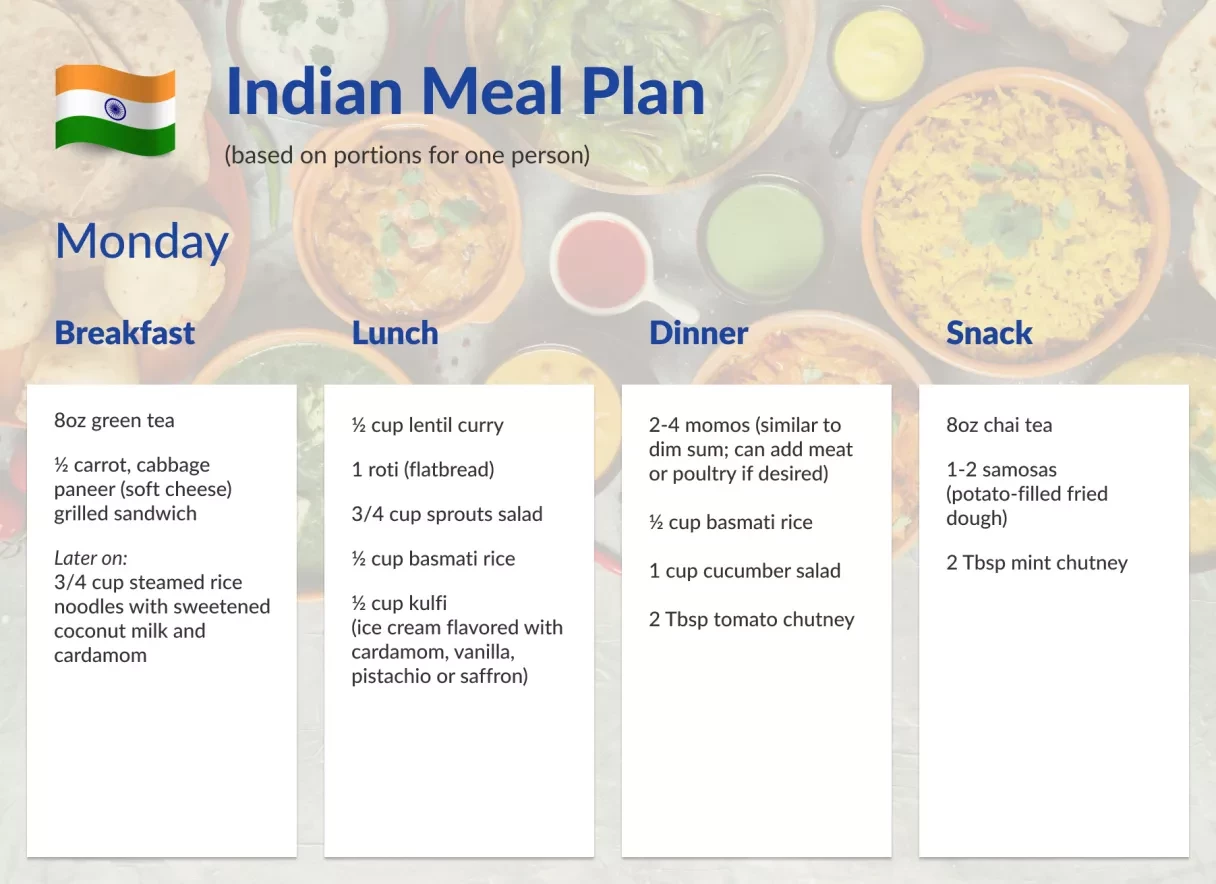
Download our free, 7-day meal plan to try out some flavorful, heart-healthy dishes from India that will inspire your taste buds like mushroom paniyaram, palate-pleasing, creamy palak paneer, or a veggie-friendly quinoa pulao. These heart-healthy, flavor-packed meals will surely inspire you to explore more Indian dishes.