Starting in your 40s, the body’s natural conversion of ubiquinone into ubiquinol declines, making this the perfect time to supplement. Support healthy aging, cellular energy, heart health, and more to set yourself up for the years ahead.
Each decade brings new shifts in how your body feels, moves, and responds. Here’s what commonly changes — and how to stay ahead of it.
Energy Metabolism Slows
You might notice a dip in stamina and longer recovery times after physical activity.
Prioritizing Heart Health
Blood pressure, cholesterol, and cardiovascular markers may begin to change.
Cellular Aging Accelerates
Your cells produce less CoQ10 — an essential nutrient for energy and heart function.
Hormonal Shifts Begin
Fluctuations begin, affecting everything from mood to metabolism and sleep patterns.
The Role of Ubiquinol in This Decade
Ubiquinol is the active antioxidant form of CoQ10 — a nutrient your body naturally produces but declines with age. It helps fuel your cells and support heart, brain, and muscle health.
Clinical Studies for Individuals in their 40s
Ubiquinol is a key antioxidant in the body that helps prevent damage from free radicals and oxidative stress. However, levels of ubiquinol are known to decrease as the body ages, which may be associated with increased oxidative stress and a decrease in the body’s ability to create ubiquinol.
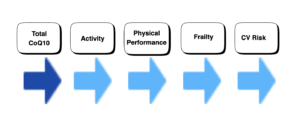
To determine the connection between total CoQ10 (ubiquinol + ubiquinone) blood levels and physical health in older age, researchers completed an observation study to correlate these levels in adults over the age of 65 with their physical capacity (de la Bella-Garzon, 2022). A total of 64 participants (ages 65–99 years) from three locations completed blood testing and physical activity tests, along with a questionnaire about their physical activity in the past 7 days, with no other intervention.
Higher levels of total CoQ10 in the blood correlated with higher activity and performance on physical fitness tests, indicating greater muscle strength and endurance, and a lower risk of frailty in this older population.
Reference
de la Bella-Garzón R, Fernández-Portero C, Alarcón D, Amián JG, López-Lluch G. Antioxidants. 2022 Jan 29;11(2):279
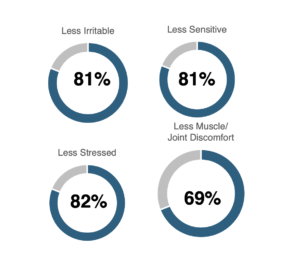
In a consumer use study, 200 women aged 45–55 experiencing common menopause-related symptoms (emotional balance, quality of life, and muscle discomfort) were recruited to participate in a two-month trial of Kaneka Ubiquinol® (200 mg/day).
At the end of the study, 81% of women reported that they felt less irritable, 81% said they felt less sensitive, 82% felt less stressed, and 69% reported feeling less muscle or joint discomfort than they did at the beginning of the trial.
This study demonstrates that supplementing with Kaneka Ubiquinol® supports the well-being of women during the menopausal years.
Reference
Kaneka Internal Report. Real-life UBIQUINOL study on 200 postmenopausal women. Expansion Consulteam. 2024. Reported in NutraIngredients Europe May 22, 2024
The health of the cardiovascular system is evaluated by assessing various physical factors including the heart’s structure and function, the condition and flexibility of the blood vessels, and blood flow to and from the heart. Healthy blood vessels are an important hallmark of cardiovascular health. Flexible vessels allow the body to adjust blood flow quickly and appropriately depending on the need. Low density lipoprotein (LDL) is known as the “bad” type of cholesterol, and when it is oxidized, it can stick to vessel walls and lead to the vessel walls being less flexible, affecting circulatory system health. However, ubiquinol acts as an antioxidant and attaches to LDL in the blood so that it’s less likely to be oxidized. Ubiquinol also helps protect cells and vessels from free radical damage, supporting the body’s ability to maintain vessel health, flexibility, and function.
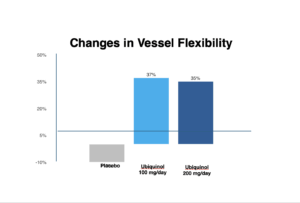
In a controlled trial by Sabbatinelli in 2020, 51 people with moderately increased levels of cholesterol in their blood took either Kaneka Ubiquinol® (either 100 mg or 200 mg) or a placebo once a day for 8 weeks. Researchers measured the amount of oxidized LDL and the amount of total CoQ10 in their blood, as well as how flexible their blood vessels were (also known as “flow mediated dilation” or FMD) before and after the 8 weeks of the trial.
Those taking ubiquinol showed 37% better vessel flexibility compared to baseline when taking 100 mg per day for 8 weeks, and 35% better flexibility when taking 200 mg per day. Both improvements were statistically significant and did not occur in the group taking a placebo.
The researchers also conducted an experiment on the susceptibility of LDL to oxidation using blood samples from these groups at the end of the study. The susceptibility of LDL to oxidation was lower in the group that took Kaneka Ubiquinol® compared to those who took the placebo, showing that ubiquinol was able to protect LDL from oxidation, an important factor in maintaining the health of blood vessels.
This study demonstrates that taking Kaneka Ubiquinol® promotes vessel health and healthy blood circulation.
Reference
Sabbatinelli J, Orlando P, Galeazzi R, Silvestri S, Cirilli I, Marcheggiani F, Dludla PV, Giuliani A, Bonfigli AR, Mazzanti L, Olivieri F, Antonicelli R, Tiano L. Nutrients. 2020 Apr 15;12(4):1098.
Simple Habits for a Healthier 40s
Setting the foundation for healthy aging, longevity, and cellular support starts with everyday lifestyle choices. A balanced diet, regular exercise, stress management, and smart supplementation can ensure you’re set up for success today and tomorrow.
Eat for Energy
Choose heart-smart foods rich in fiber, healthy fats, and antioxidants.
Stay Active
Staying active at any age supports health, strength, and longevity.
Rest and Recover
Prioritize consistent sleep to support cellular repair and cognitive health.
Supplement
Ubiquinol helps restore CoQ10 levels and support heart health.
Stress Less
Manage stress with breathing techniques, journaling, or mindful breaks.
Choosing the right supplements can feel overwhelming. We’ve gathered answers to common questions about a supplement containing Kaneka Ubiquinol® so you can feel confident in your choices.
In your 40s, your body’s natural ability to convert the fully oxidized form of CoQ10, ubiquinone, into its active antioxidant form, ubiquinol, declines. A Kaneka Ubiquinol® supplement helps maintain cellular energy, heart health, and protection against oxidative stress during these biological changes.
Yes. Naturally occurring ubiquinol and a Kaneka Ubiquinol® supplement support healthy mitochondrial function — vital to the processes your cells use to create energy. As part of this process, Kaneka Ubiquinol® protects against an excess of free radicals — which can contribute to premature aging.1
For optimal absorption, it’s best to take it daily with a meal containing healthy fats. Consistency is key to supporting energy, cardiovascular function, and long-term wellness.
Ubiquinol in molecule or supplement form supports general health and well-being during menopausal and postmenopausal years. Because post-menopausal women exhibit higher oxidative stress than pre-menopausal women, ubiquinol’s antioxidant properties serve as a crucial ally to protect against cellular damage.2,3,4
Kaneka Ubiquinol® supports your heart’s energy-demanding cells by fueling mitochondria, promoting cellular energy, and protecting against harmful free radicals for optimal heart health.
Looking for Ways to Give Your Heart More Love? Start Our Healthy Heart Challenge
There are lots of ways to maintain cardiovascular health, from diet to exercise to managing stress. Each month, we’ll give you one goal to work toward so you can give your heart the support it deserves.
1Bratic A, Larsson NG. The role of mitochondria in aging. J Clin Invest. 2013 Mar;123(3):951-7.
2Palacios S, Ramírez M, Lilue M, Barahona S, Rodríguez D. Estudio clínico para conocer laeficacia de la Coenzima Q-1 O sobre la calidad de vida en mujeres postmenopáusicas. Toko-Gin Pract. 2019.78(1):3-7. (Proprietary English translation on file)
3Kaneka Internal Report. Real-life UBIQUINOL study on 200 postmenopausal women. Expansion Consulteam. 2024.
4Sánchez-Rodríguez MA, Zacarías-Flores M, Arronte-Rosales A, Correa-Muñoz E, Men 4Sánchez-Rodríguez MA, Zacarías-Flores M, Arronte-Rosales A, Correa-Muñoz E, Mendoza-Núñez VM. Menopause as risk factor for oxidative stress. Menopause. 2012 Mar;19(3):361-7.